Where Brighton ceiling leaks come from
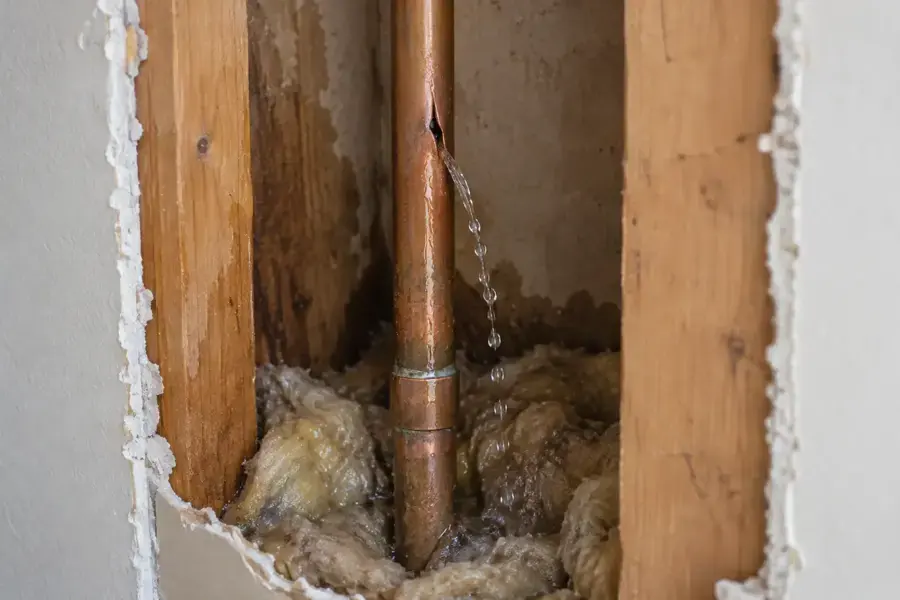
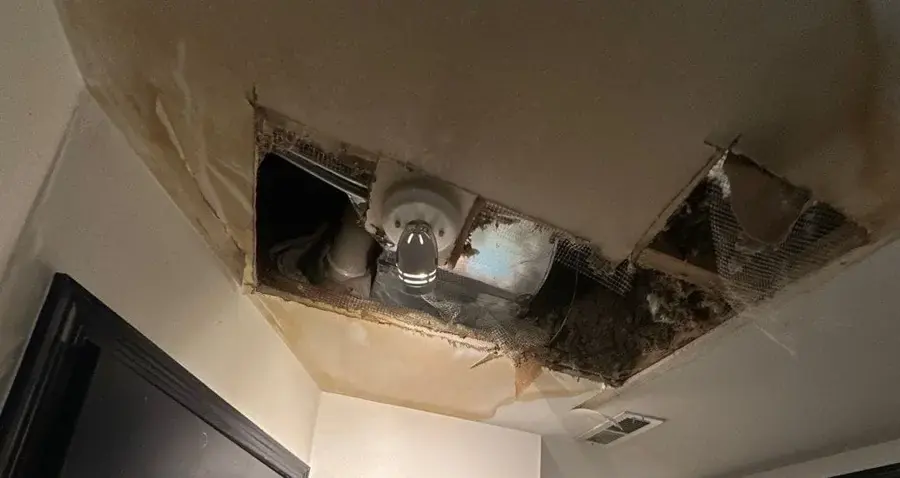
Most Brighton homes are two-story or ranch-over-basement, so there is almost always a bathroom, laundry or kitchen above a ceiling. Water from a failed wax ring, a cracked supply line, a washer drain or an overflowing tub runs along the joists before it shows, so the stain is rarely right under the source. In summer, a clogged AC condensate drain in an attic or upstairs closet can do the same thing.
- Toilet wax rings and supply lines in upstairs baths
- Tub and shower drains and failed grout
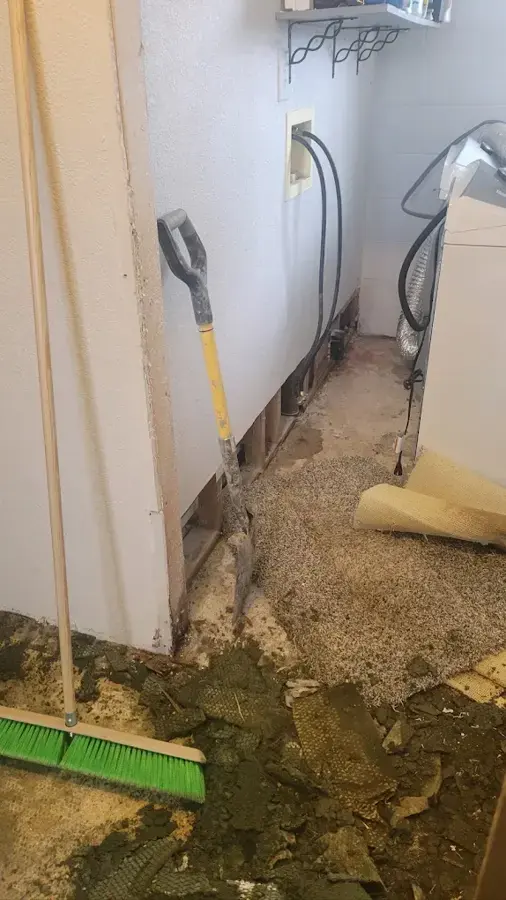
- Washer hoses in second-floor laundry rooms
- AC condensate lines and pans in attics and closets
How a wet ceiling is handled
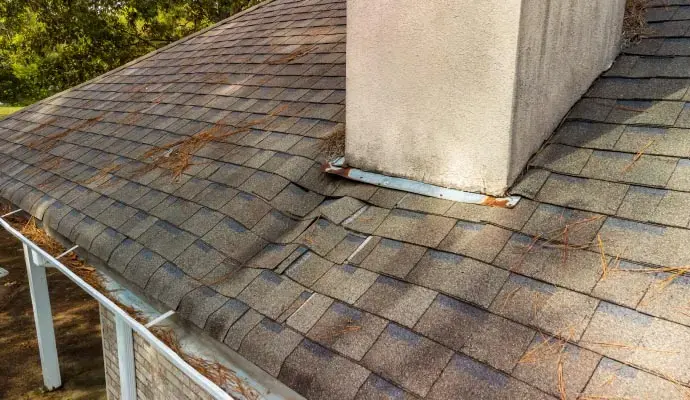
The tech who does the walkthrough uses thermal imaging to follow the water along the joists and a meter to check the drywall. Drywall that sagged or stayed wet comes down; drywall with a small wet patch can often be dried in place with air aimed at it and a dehumidifier running. If water ran down into walls, the drying team opens the bottom of those walls too. Roof leaks are covered on the hail and roof leak water damage page.
A ceiling stain that grows after the source is shut off means water is still trapped above it.
After the source is fixed
A plumber fixes the source, then drying continues until readings reach the goal. EPA WaterSense explains how to check toilets and fixtures for hidden leaks, and the Consumer Product Safety Commission tracks recalls on appliances and hoses. For a washer or dishwasher source, see appliance leak water damage.