Why window wells flood in Brighton
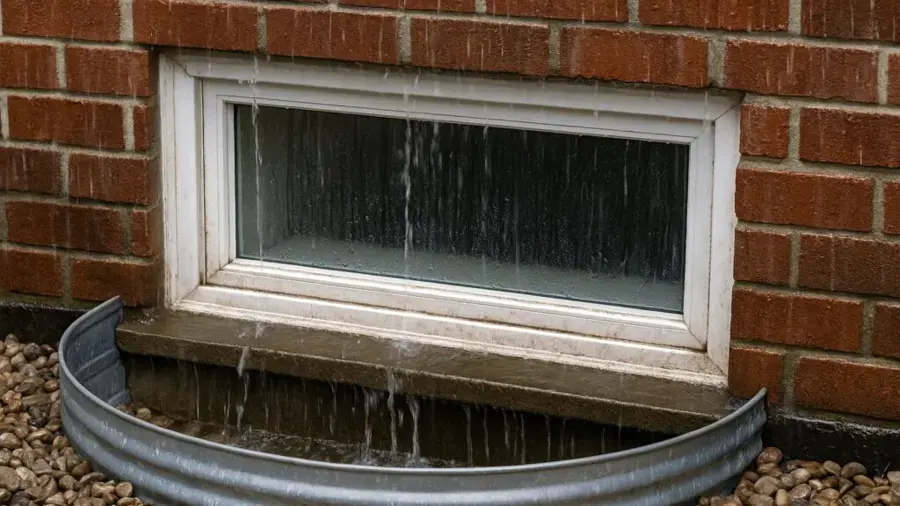
Most Brighton basements have at least one egress window set below grade, with a metal well holding the soil back. The well is supposed to drain through gravel into the foundation drain system. When a May to August thunderstorm dumps an inch of rain in a short burst, a well with clogged gravel, a missing cover or a downspout emptying next to it fills like a bucket, and the water finds the weakest seal in the window.
- Leaves, soil and hail debris clogging the gravel at the bottom of the well
- Downspouts and sloped patios sending roof water straight into the well
- Window frames with failed seals or weep holes
- Foundation drains already full because the sump pump is struggling
How the wall and floor are dried
The extraction crew pulls water from the carpet and pad under the window. Water running down the inside of a wall soaks the insulation and bottom plate, so the tech who does the walkthrough uses thermal imaging and meters to see how far it traveled. Wet insulation comes out, a flood cut opens the cavity, and the drying team aims air movers into the wall with LGR dehumidifiers pulling the moisture back out of the air. If the water spread across the room, see basement flooding cleanup.
A clear well cover and a clean gravel bed are cheap. A soaked finished basement is not.
Keeping the well from filling again
Clear debris from the well each spring and fall, keep downspouts discharging well away from it, and consider a clear cover that still opens from inside for egress. The National Weather Service flood safety page explains flash flooding from heavy storms, and Colorado State University Extension covers yard grading and drainage for Front Range homes. The storm and flash flood cleanup page covers wider storm water losses.