How Brighton pipes freeze
Brighton sits on open plains northeast of Denver, and arctic air masses can drop temperatures well below zero for days at a time. Most homes here are heated and insulated, so the lines that freeze are the ones at the edges: pipes in exterior walls, lines through a garage ceiling, rim joist runs in the basement, and hose bibs.
- Frost-free spigots with a garden hose still attached, which trap water and split inside the wall
- Sprinkler backflow preventers not drained before an early freeze
- Supply lines in garage ceilings under a bonus room
- Lines along cold rim joists in basements
Why the water shows up on the thaw
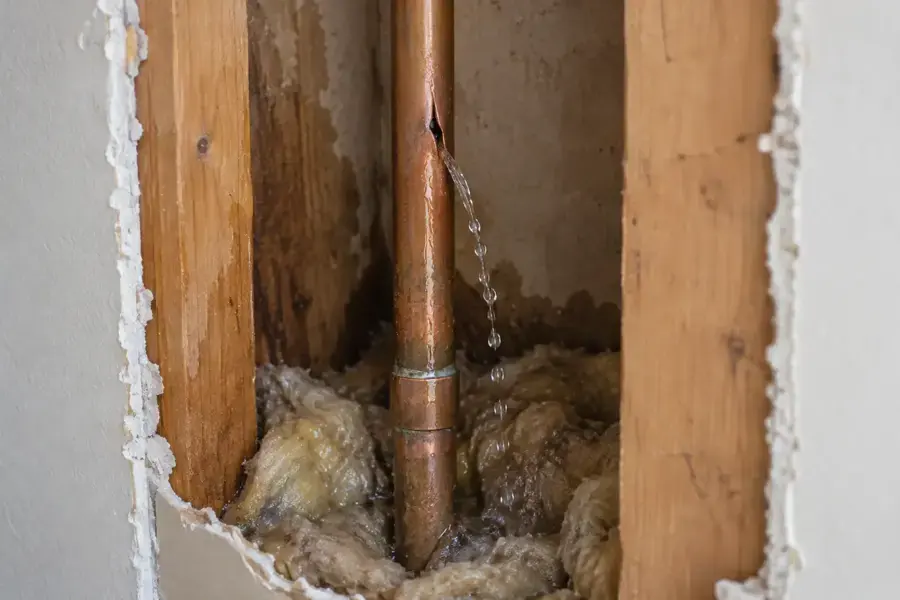
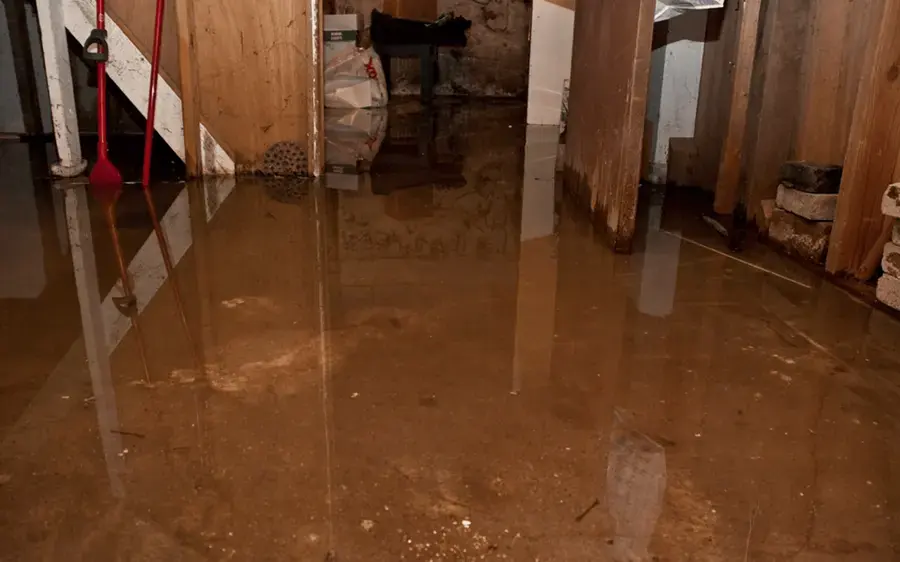
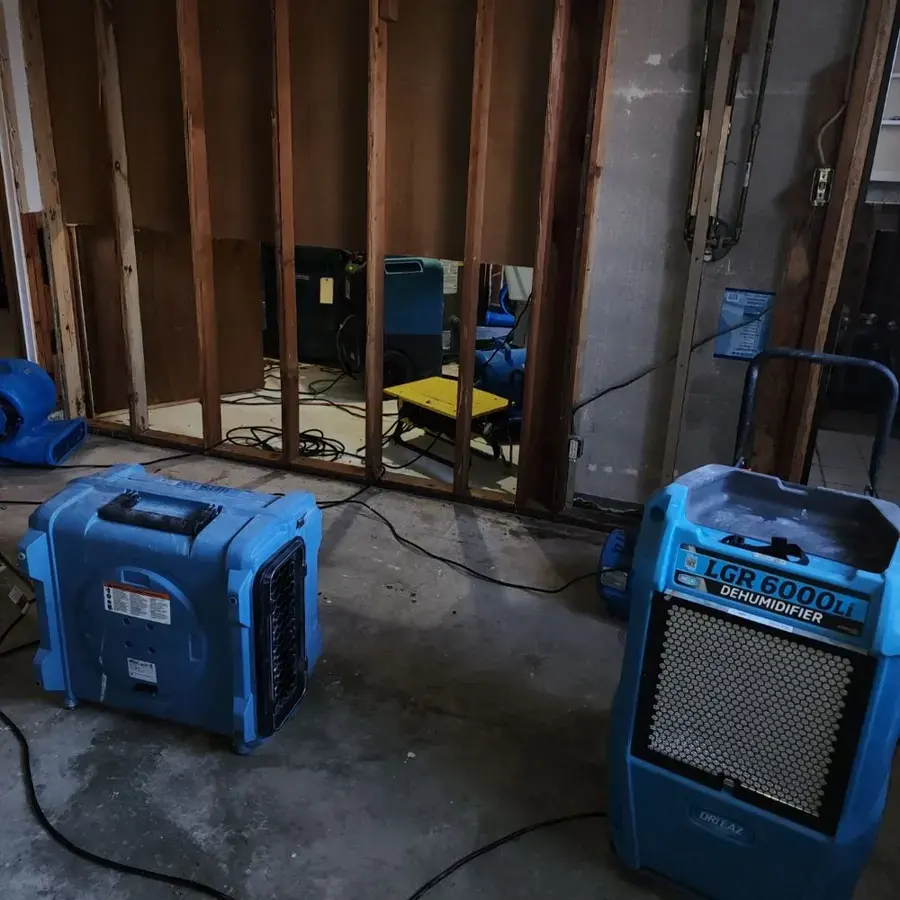
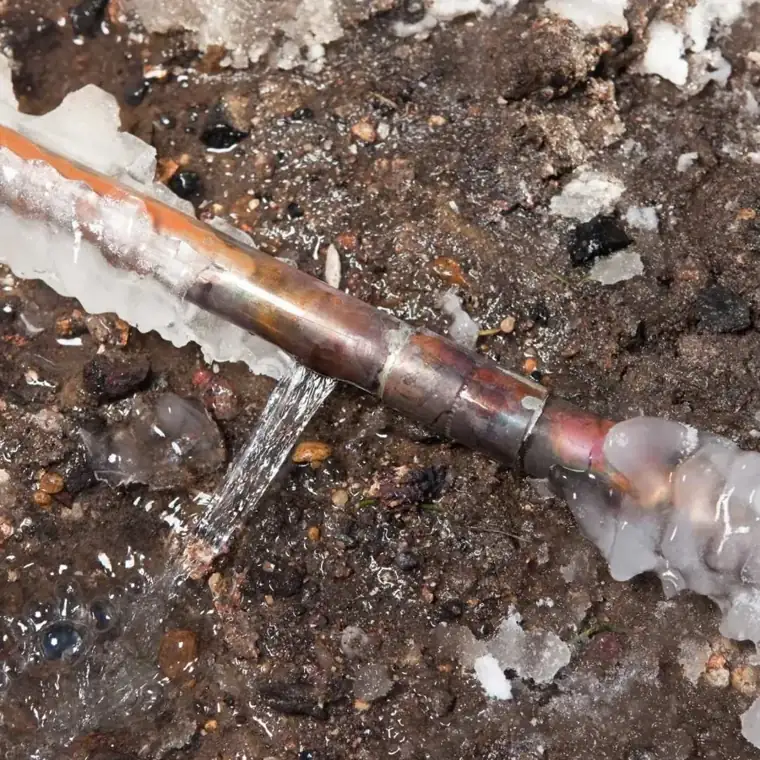
Ice expands and splits the pipe, but the ice also plugs it. The water starts running when the line thaws, often a day later and often inside a wall. The tech who does the walkthrough uses thermal imaging to find the cold, wet cavity, the extraction crew pulls any standing water, and the drying team opens the wall where the insulation soaked. A spigot split inside the wall usually sends water straight into the basement below it.
Disconnect hoses every fall. A frost-free spigot only protects itself when it can drain.
Before the next cold snap
Disconnect hoses, drain and blow out sprinkler lines, keep the garage door closed, and open cabinet doors on exterior walls during a deep freeze. The National Weather Service cold safety page explains extreme cold, and Ready.gov winter weather covers home preparation. If the split sprayed through a wall, see burst pipe cleanup.