Hail, then the leak
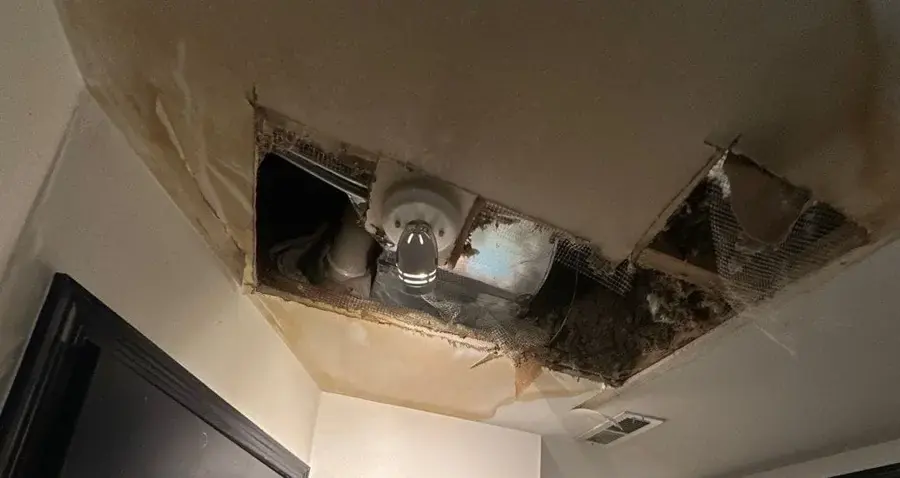
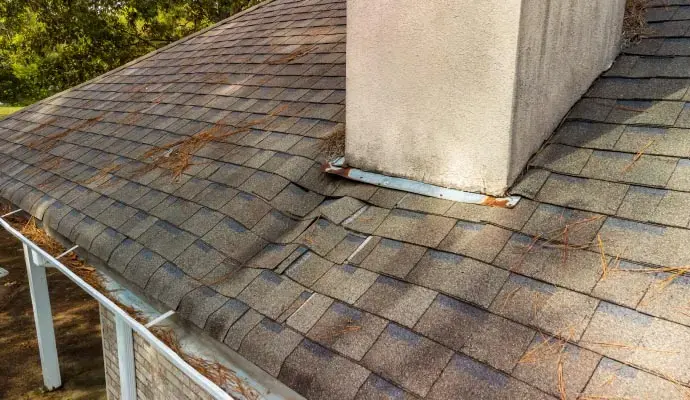
The Front Range is one of the most hail-prone parts of the country, and Brighton sits right in the storm track that crosses the plains in late spring and summer. Hail rarely punches a hole straight through a roof. It knocks granules off shingles, cracks seals, dents vents and breaks skylights, and the leak shows up a storm or two later, often as a brown ring on a bedroom ceiling.
- Bruised or cracked shingles that let water under the laps
- Dented roof vents and broken skylight glazing
- Flashing pulled loose at chimneys and walls
- Wind-driven rain forced under shingles in a strong storm
How the attic and ceilings are dried
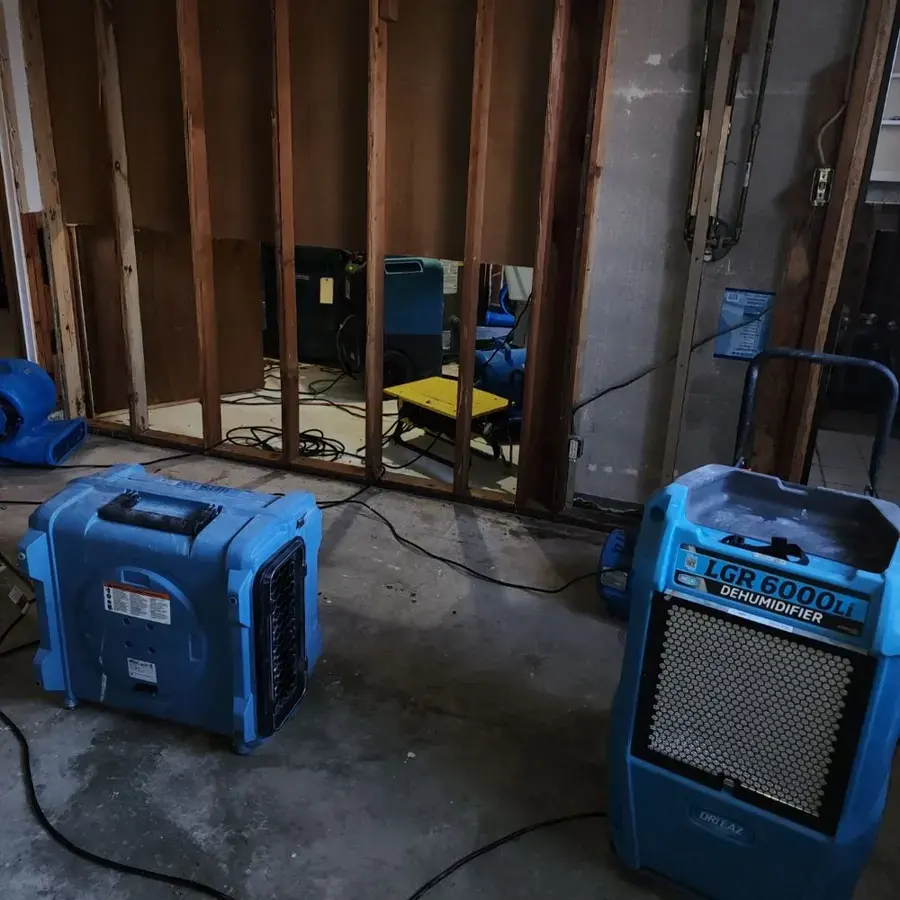
Blown-in insulation soaks up rain and presses down on the ceiling drywall, which is why a leak can sag a ceiling. The tech who does the walkthrough checks the attic with thermal imaging and meters, wet insulation comes out, and the drying team dries the roof deck, joists and drywall. Ceiling drywall that sagged or stayed wet usually comes down; drywall with a small wet patch can often be dried in place. See ceiling leak water damage for leaks from inside the house.
Photograph hail damage and ceiling stains before any repairs. Insurers look for both.
Getting the roof and the claim sorted
A roofer tarps and repairs the roof; the drying team handles the water inside. The National Weather Service thunderstorm page covers hail and severe storm safety, and Ready.gov severe weather covers preparing a home. If the storm also flooded the basement, see storm and flash flood cleanup.